Formiq
2025
Description
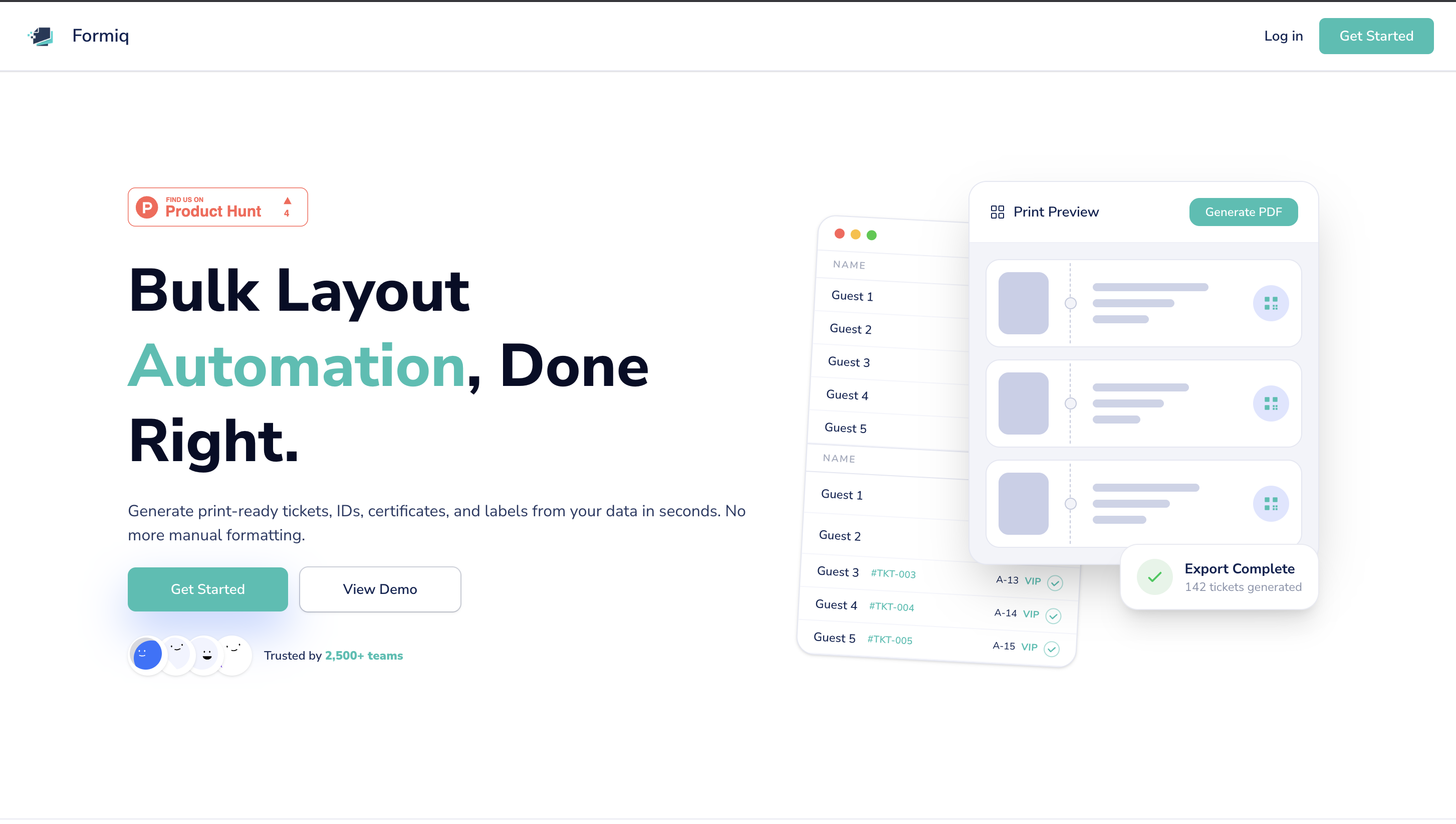
Formiq is a web-based Bulk Document Layout Automation platform designed to bridge the gap between beautiful design and efficient print production. It lets users upload a base design template (PNG or JPEG), import data from a CSV file, visually bind dynamic fields onto the canvas, and generate thousands of print-ready, grid-laid-out PDFs in minutes — with no manual copy-pasting. Formiq targets high-volume asset production for events, organizations, and businesses that need to produce certificates, tickets, ID cards, labels, and more at scale.
Problem
Producing hundreds or thousands of personalized documents — certificates, event tickets, ID cards — traditionally means hours of repetitive copy-paste work in design tools, prone to human error and misalignment. Existing general-purpose design tools aren't built for deterministic print production at scale. There was no focused, affordable platform that combined a visual canvas editor, structured data imports, and automated grid layout generation into a single print-optimized workflow.
Technical Details
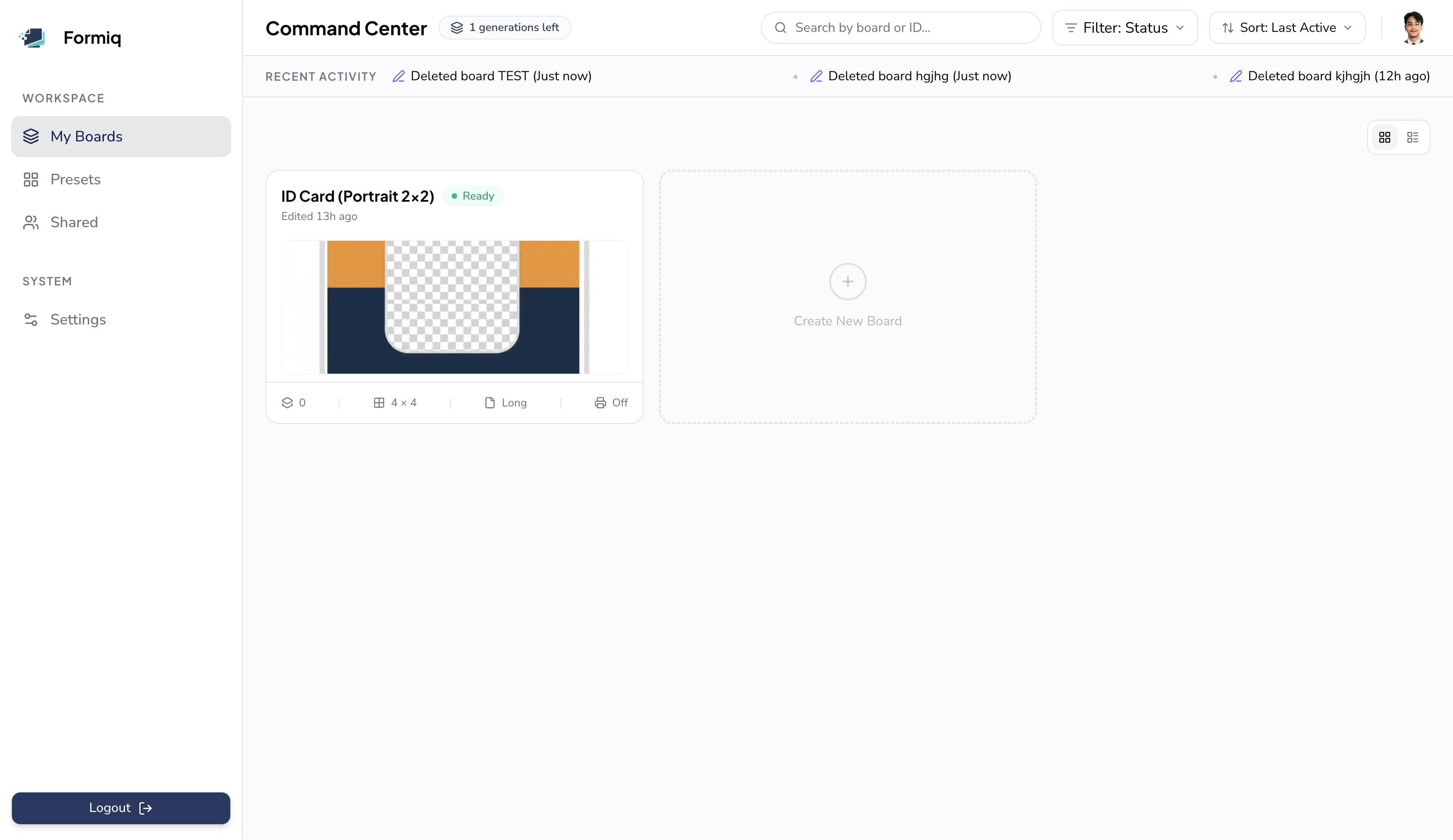
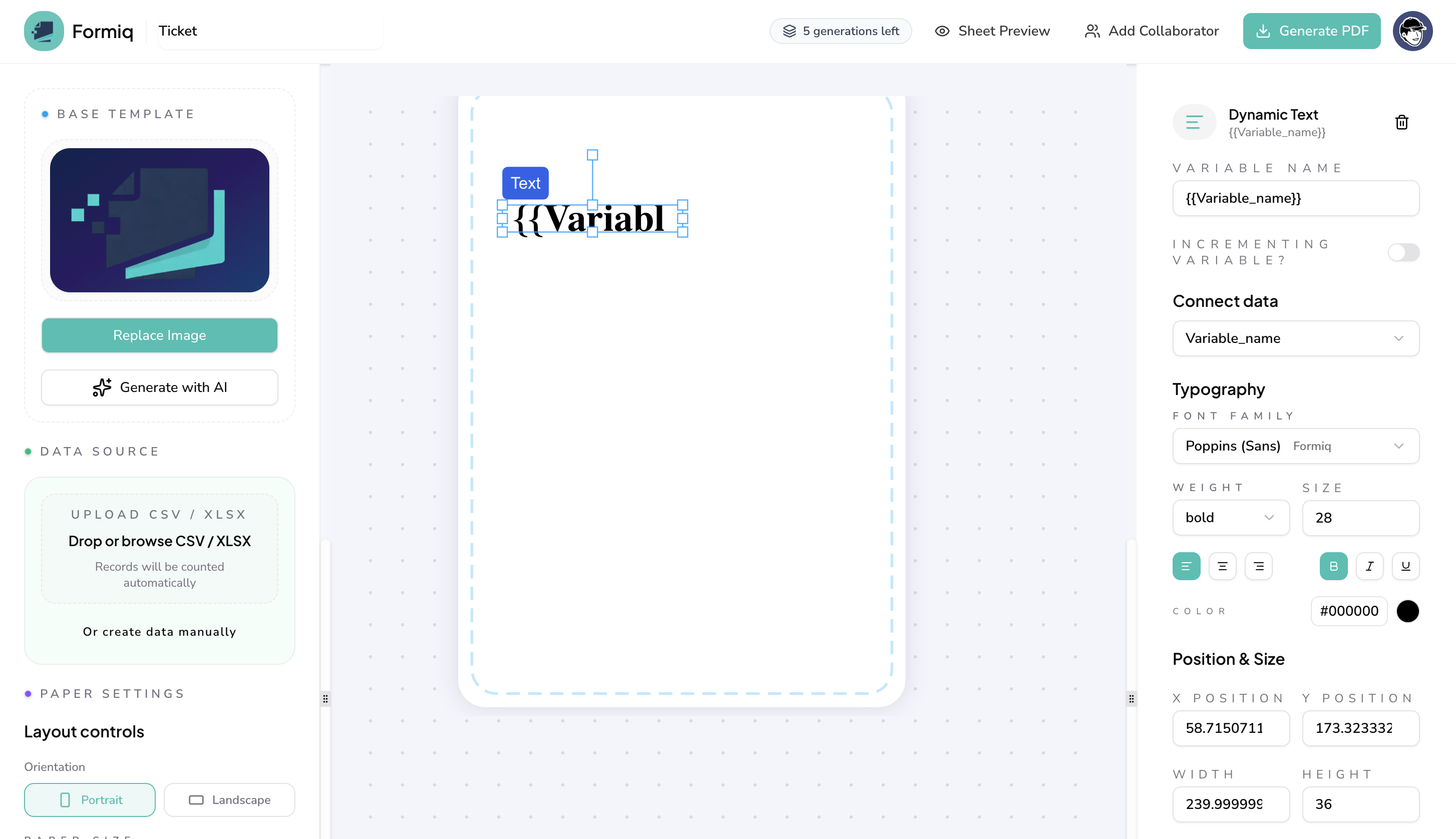
Formiq is built with Next.js and TypeScript on the frontend, featuring a drag-and-drop canvas editor for pixel-perfect variable placement. The backend handles PDF generation using pdf-lib, with support for dynamic fields including text, QR codes, and barcodes. The core technical challenge was building a concurrent batch processing pipeline capable of generating assets per-page across thousands of documents simultaneously. This was solved by architecting a job queue system using BullMQ backed by Redis, which processes asset generation in controlled concurrent batches — preventing out-of-memory errors while maintaining throughput. The system supports automatic grid layout rendering based on configurable paper sizes, rows, columns, and margins. A built-in sheet editor (similar to Google Sheets) allows live data editing, and AI-powered asset generation lets users create design templates from a text description when they don't have an existing file.
My Role
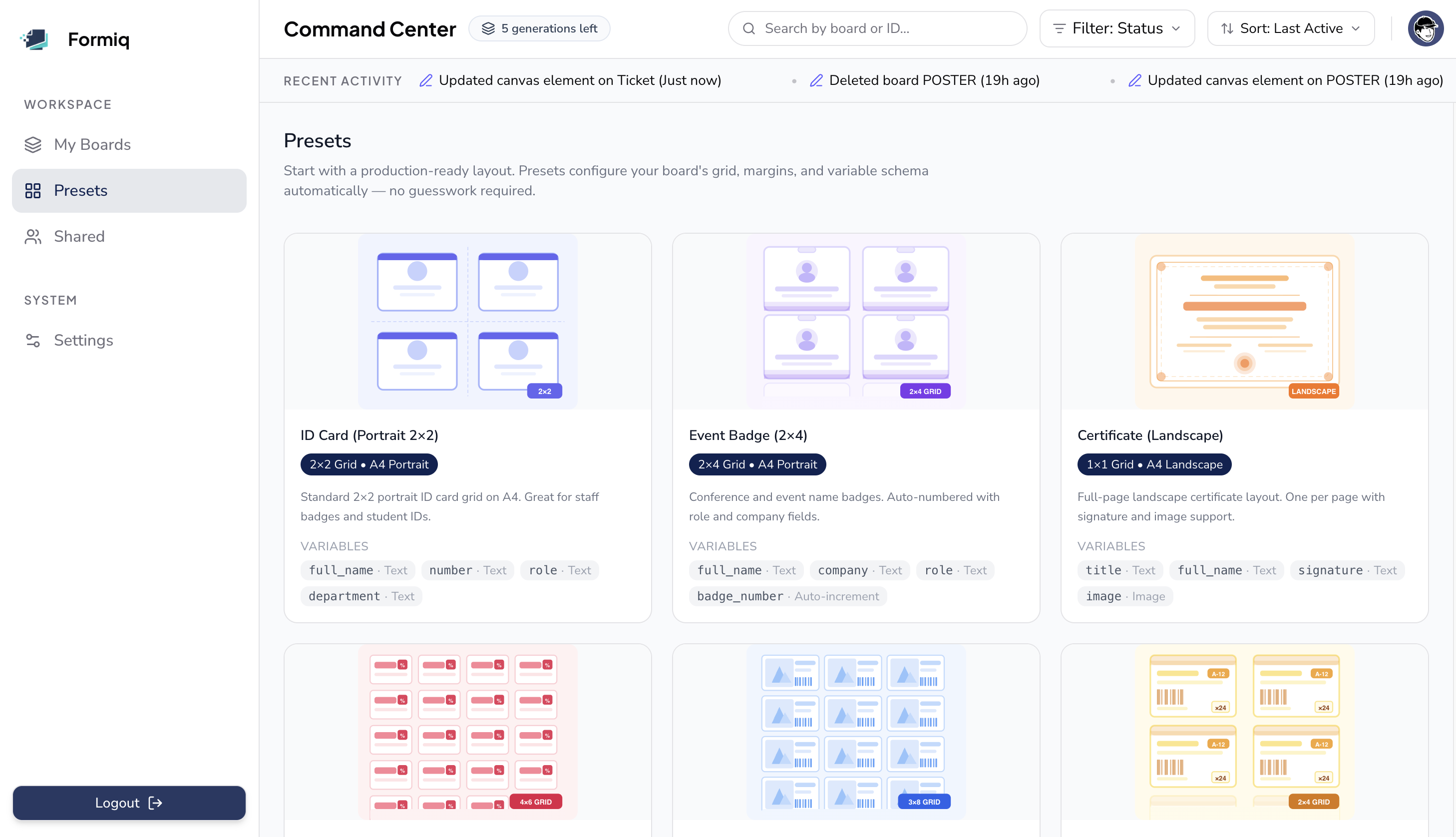
I designed and built Formiq end-to-end — from the canvas-based layout editor and CSV data binding system to the PDF generation pipeline and BullMQ job queue architecture. I implemented the grid layout engine, QR/barcode generation, incremental variable support, system presets, orientation and margin controls, and the AI-generated asset feature. I also handled deployment, pricing integration, and the overall product UX.
Challenges
The most significant engineering challenge was the concurrent batch processing architecture for asset generation. Generating a high-resolution PDF asset per page across thousands of records simultaneously risks out-of-memory crashes if all jobs run at once. I solved this by implementing a BullMQ queue with controlled concurrency — batching page-level generation jobs so that only a bounded number run in parallel at any time, draining completed jobs before enqueuing the next batch. This kept memory usage stable under load while still achieving fast generation throughput. Ensuring pixel-accurate placement of canvas elements in the generated PDF output — matching what users saw on screen — was another key challenge that required careful coordinate mapping between the canvas renderer and pdf-lib's coordinate system.
Screenshots
Conclusion
Formiq successfully delivers on the promise of eliminating repetitive document production work. What used to take hours of manual editing can now be completed in minutes with a simple upload, map, place, and generate workflow. The BullMQ-based batch pipeline makes it production-ready for high-volume jobs without crashing, and features like incremental variables, AI-generated templates, and reusable presets make it flexible across a wide range of use cases.